Blog
How Are Assets Divided Without a Will?
Losing a parent is a profound and difficult experience. On top of the grief, you may be faced with the responsibility of handling their affairs. If your parent passed away without a will, you are likely wondering what happens next, especially with significant assets like a family home. In California, when someone dies without a will, the state has a clear set of rules for how their assets are divided. This legal process is known as intestate succession, and it directs who inherits property and in what proportion.
If you are responsible for settling the estate, working with a probate lawyer can help you navigate this process with confidence and clarity.
How Assets Are Divided Without a Will Guide
- Key Takeaways about How Assets Are Divided Without a Will
- Understanding “Intestate Succession” in California
- The First Step: Identifying Community vs. Separate Property
- How California Divides Separate Property Without a Will
- What About the House? Common Scenarios in San Diego
- The Role of the Probate Court
- How Assets Are Divided Without a Will FAQs
Key Takeaways about How Assets Are Divided Without a Will
- When a person dies without a will in California, their estate is distributed according to state intestate succession laws.
- California law first categorizes assets as either community property (generally, assets acquired during marriage) or separate property (generally, owned before marriage or received as a gift/inheritance, or as part of a prenuptial agreement).
- A surviving spouse is entitled to all of the community property and at least half of the decedent’s separate property.
- Children, parents, and siblings may inherit portions of the separate property depending on which family members survive the decedent.
- The probate court oversees this entire process to validate heirs, pay creditors, and legally transfer ownership of the assets.
Understanding “Intestate Succession” in California
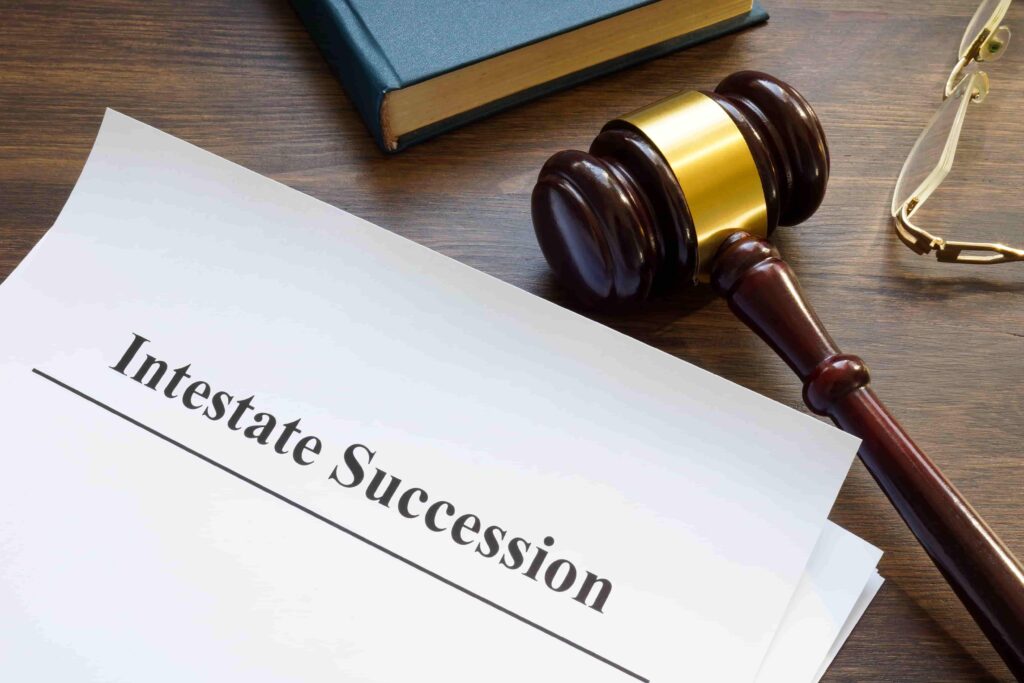
When a person passes away without a valid will, they are said to have died “intestate.” Instead of the family guessing what their loved one might have wanted, the state of California provides a legal roadmap. The laws of intestate succession, found in the California Probate Code § 6400-6414, act as a default will created by the state.
The system is designed to distribute assets to the closest living relatives in a specific order of priority. The court’s job is to follow these instructions precisely to settle the estate.
The First Step: Identifying Community vs. Separate Property
Before any assets can be divided, they must be categorized. In California, a community property state, this distinction is critical.
- Community Property: This includes any assets, property, or income that was acquired by either spouse during the marriage. Think of it as everything a couple earned and bought together.
- Separate Property: This category covers assets that belonged to one person before the marriage, were received as a gift or inheritance specifically by them during the marriage, or were acquired after a legal separation, or as part of a prenuptial or postnuptial agreement.
If there is a surviving spouse, they will automatically inherit 100% of the community property. The division of separate property is where the rules of intestate succession become more detailed.
How California Divides Separate Property Without a Will
The distribution of a person’s separate property depends entirely on which family members are still living at the time of their death. The law establishes a clear hierarchy to determine who the legal heirs are.
Here is the most common order of inheritance for separate property:
- Surviving Spouse Only: If there is a surviving spouse but no children, parents, or siblings, the spouse inherits all of the separate property.
- Spouse and One Child: The separate property is divided equally, with one-half going to the surviving spouse and one-half to the child.
- Spouse and Multiple Children: The surviving spouse inherits one-third of the separate property, and the remaining two-thirds are divided equally among all the children.
- Children Only: If there are children but no surviving spouse, the entire estate is divided equally among them.
- No Spouse or Children: If the deceased person had no spouse or children, the assets would go to other relatives in a specific order, starting with parents, then siblings, then grandparents, and so on.
This legal framework provides a predictable and orderly way to distribute assets, removing any guesswork from the process.
What About the House? Common Scenarios in San Diego
For many families, the biggest question is what to do with the family home. Whether it’s a house in Solana Beach or a condo near Balboa Park, the approach is the same. The home is an asset of the estate, and its future depends on the intestate succession rules.
If your last surviving parent owned the home, it becomes part of their estate. Under the rules, all children would inherit the property equally. At that point, the heirs have a few options:
- Sell the Property: The most common solution is to sell the house and divide the cash proceeds among the heirs according to their legal shares.
- One Heir Buys Out the Others: If one sibling wishes to keep the home, they can arrange to buy out the other siblings’ shares, often by refinancing the property or using other funds.
- Continue to Co-Own: While less common, the heirs could decide to own the property together, perhaps as a rental investment.
These decisions are made during the formal court process, which gives everyone a structured forum to reach an agreement.
The Role of the Probate Court

When someone dies without a will, and their assets are valued above California’s small estate limit of $208,850, their estate must go through a court-supervised process called probate. You can find more information about this process on the San Diego Superior Court’s website.
The probate court’s involvement provides a crucial safety net. The court will appoint a person, called an estate administrator, to manage the estate. This person, often an adult child, is responsible for:
- Gathering and inventorying all of the deceased person’s assets.
- Notifying creditors and paying any outstanding debts.
- Filing a final tax return for the deceased.
- Distributing the remaining assets to the legal heirs according to intestate succession laws.
This formal process ensures that everything is handled correctly, protecting the administrator from personal liability and giving all heirs peace of mind that the division was fair and legal.
How Assets Are Divided Without a Will FAQs
Here are answers to some common questions about handling an estate without a will.
What happens to debt when someone dies without a will?
The estate is responsible for paying the deceased person’s debts. The estate administrator uses the estate’s assets to pay off creditors like credit card companies, medical bills, and mortgages before any money or property can be distributed to the heirs. Heirs are generally not personally responsible for the deceased’s debts.
Do all assets have to go through probate?
No, not all assets are subject to probate. Assets that have a designated beneficiary or are held in joint tenancy pass directly to the named person outside of court. This often includes things like life insurance policies, retirement accounts (401(k)s, IRAs), and bank accounts with a “payable-on-death” (POD) designation.
What if we can’t find any relatives?
In the rare situation where a person dies with no identifiable living relatives, their property is transferred to the state of California. This is called “escheat.” The state holds the property, and if no heir comes forward within a certain period, the state absorbs it permanently.
How long does the probate process take in California without a will?
A straightforward probate case in California typically takes between 12 and 18 months from start to finish. However, the timeline can be longer if there are complications, such as disputes among heirs, difficulties selling property, or challenges from creditors.
Can stepchildren inherit in an intestate succession?
Generally, stepchildren do not have inheritance rights under California’s intestate succession laws. However, there is an exception: a stepchild may be able to inherit if they can prove that their stepparent would have adopted them but was prevented from doing so by a legal barrier. This is a complex situation that requires specific legal documentation.